 Back to Articles listing
MEP Course: Master BIM Skills for Industry-Ready Engineers
- December 16, 2025
-
Read time unavailable
- By - MiT
Understanding the Role of MEP in Modern Construction
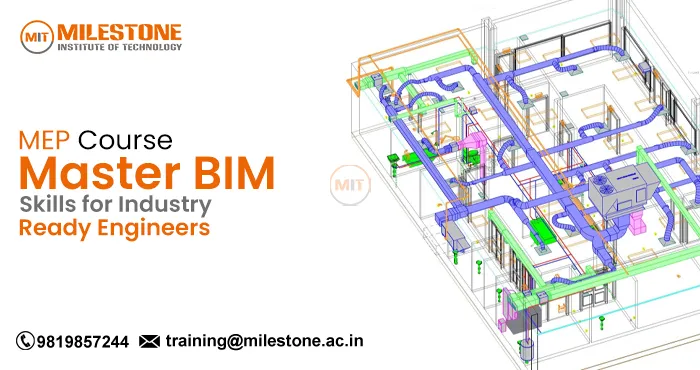
MEP systems are an essential component of a building. Mechanical systems such as HVAC provide the heating, ventilation, and cooling of a building. Electrical systems distribute electrical power and provide lighting and safety systems within a building. Plumbing systems provide water supply, waste disposal, and a sanitary environment.
A lack of proper integration of MEP systems into the design phase results in delays, increased costs, and operational failures of the project. The MEP Course teaches engineers to use Building Information Modeling (BIM) to design, coordinate and manage MEP systems professionally and effectively.Why BIM Skills Are Essential for MEP Engineers
BIM provides a single source of real-time coordination activity by all components of a building. Engineers are trained on how to build intelligent models that include system specifications, in an MEP course. Students learn how these models identify potential conflicts in advance of the construction phase and thus improve communication among team members. Therefore, these skills are mandatory for most large projects, which utilize BIM for MEP coordination.What You Learn in a Professional MEP Course
An effective MEP Course combines theoretical education with hands-on experience. You will learn the theories related to mechanical, electrical and plumbing systems, as well as Building Information Modeling (BIM). In most cases, your MEP Course will provide information about the design standards used in MEP system model development, as well as best practices for creating and delivering MEP projects.
Additionally, an MEP Course will provide instruction on how to generate construction-ready drawings, schedules, and reports directly from an MEP system BIM model. The goal of the Course is to ensure that students not only learn how to operate software but also understand engineering principles and logic behind MEP system development.Tools and Software Covered in an MEP Course
Engineers are now heavily reliant on new technologies for MEP Design. The course is geared towards the engineering industry and provides engineers with knowledge of Building Information Modelling (BIM) Tools to create and coordinate MEP systems. This allows the engineer to learn how to envision duct, pipe, cable tray & electrical layouts all within a 3D environment. The MEP Course describes how to manage project data, update models and work together with architectural and structural teams to ensure the overall success of the project. All of these skills equip engineers to readily adapt to the working environment of the MEP industry.Benefits of an MEP Course for Engineering Students
For students, an MEP Course helps bridge the gap between academic studies and industry expectations. Without the benefits of practical experience in BIM-based workflows, many engineering graduates face difficulty when entering the workforce. Enrolling in an MEP Course will allow students to gain hands-on experience with real-world design scenarios, thereby increasing their confidence and job readiness. The course will also assist students in learning the terminology, standards and coordination processes used in the industry on live projects.How Working Professionals Gain from an MEP Course
The MEP course allows working engineers to develop new skills so that they remain competitive. Many companies now use a BIM based delivery system. Consequently, professionals who possess BIM skills will have a larger opportunity for growth in their career. The MEP course provides transition support from using traditional drafting methods to using modern BIM workflows. This course also helps improve engineers’ efficiency, accuracy and coordination capabilities, which makes them very desirable by employers. As a result of completing the MEP course, engineers will often be assigned to projects with better roles and more responsibilities.Industry Demand for BIM Trained MEP Engineers
The need for MEP Engineers who are trained in BIM is increasing for Commercial, Residential and Infrastructure Projects, and companies are now looking for individuals to work on complicated MEP Systems in a digital environment that encompasses all aspects of the project. The MEP Course trains engineers to develop their skills based upon what is needed in the market today, therefore when an engineer is schooled through a MEP Course the engineer has a greater ability to manage large-scale jobs and multi-disciplinary Coordination.Career Opportunities After Completing an MEP Course
After completing an MEP Course, you can choose from many different career options. Engineering Professionals who complete an MEP Course may choose to work as MEP BIM Modelers, MEP Design Engineers, Coordination Specialists, or Project Support Engineers. The skills developed during an MEP training will be applicable in many areas, including construction consulting services and facility management. MEP Courses continue to be in high demand globally; therefore, professionals who have MEP experience will see excellent career opportunities and growth.Why an MEP Course Makes You Industry Ready
The MEP Course teaches users how to utilize the software effectively, while providing a detailed background on the overall process of coordinating engineering systems and project standards. The MEP training also teaches participants how to safely conduct clash detection and resolution and create the most complete model possible. This training prepares participants to begin working as engineers on the job from day one, as well as to be professional engineers in the future, able to understand and interpret design intent and construction requirements.Conclusion
In today’s competitive construction industry, mastering BIM skills is essential for MEP engineers. The course provides the technical knowledge practical training and industry exposure needed to succeed. Whether you are a student or a working professional an MEP training helps you stay relevant and industry ready. By learning modern BIM based MEP practices engineers can build a strong foundation for long term career success.Share this on
-

-

-

Recent Articles
-

Interior Design Course to Become Job-Ready Quickly
-
Tekla Structures Course in Thane – Get Certified & Hired
-
Mechanical Design Career Path: Jobs, Skills and Salary
-
Best CAD course in Thane with Certification | MIT
Archive posts
-
April2026
-
March2026
-
February2026
-
January2026
-
December2025
-
November2025
-
October2025
-
September2025
-
August2025
-
July2025
-
June2025
-
May2025
-
April2025
-
March2025
-
January2025
-
September2024
-
August2024
-
July2024
-
June2024
-
May2024
-
April2024
-
March2024
-
February2024
-
January2024
-
September2023
-
December2022
-
September2022
