 Back to Articles listing
AI in Mechanical Design: How AI Is Transforming Engineering
- July 14, 2026
- 3 Min
- By - MiT
AI in Mechanical Design: How AI Is Transforming Engineering
Artificial Intelligence (AI) has impacts on industries all over the world, including mechanical engineering. AI is influencing every step of the process, from developing a concept and CAD modeling to simulations and manufacturing to predictive maintenance. What took days of work can now be done in a fraction of that time using AI.
The use of AI in mechanical engineering is contributing to the growth of productivity of organizations, improves accuracy of design processes, optimizes performance of the product, and contributes to fast innovation. More and more industries are getting digital and experts in AI in mechanical design are needed more than ever as every company gets ready for Industry 4.0 and moves towards smart manufacturing.
In this blog, we will analyze why AI is changing mechanical engineering, what are advantages of implementation of AI, where it’s applied, what are software solutions available for engineers for implementation of AI in their mechanical design projects, and what is the future of this technology.
What is AI in Mechanical Design?
AI in Mechanical Design means the use of Artificial Intelligence, Machine Learning (ML), and data-driven processes to help engineers during design and development of products. AI is capable of examining huge amounts of engineering data, finding design optimization opportunities, and performing automating repetitive tasks and generating the perfect design proposition based on needed requirements.
Unlike standard CAD software that only requires manual input of data, the use of AI-based engineering systems makes it possible to learn from previous designs and suggest alterations, optimize the material consumption, and create numerous design options automatically.
At present, AI is becoming an important part of modern mechanical product development for various industries including automotive, aerospace, industrial production machinery, robotics, electronics, and manufacturing.

The Importance of AI in Mechanical Design
Modern engineering tasks need to meet the requirements of faster development, improved quality, and reduced costs. Traditional design methods often require extensive manual calculations, repeated design iterations, and multiple prototypes.It is AI in Mechanical Design that can have substantial benefits here.
Thanks to AI, engineers are able to:
- Automate routine design processes
- Decrease engineering mistakes
- Increase the quality of the product
- Optimize the weight and consumption of materials
- Improve the speed of design validation
- Cut costs of product development
- Facilitate cooperation between designing groups
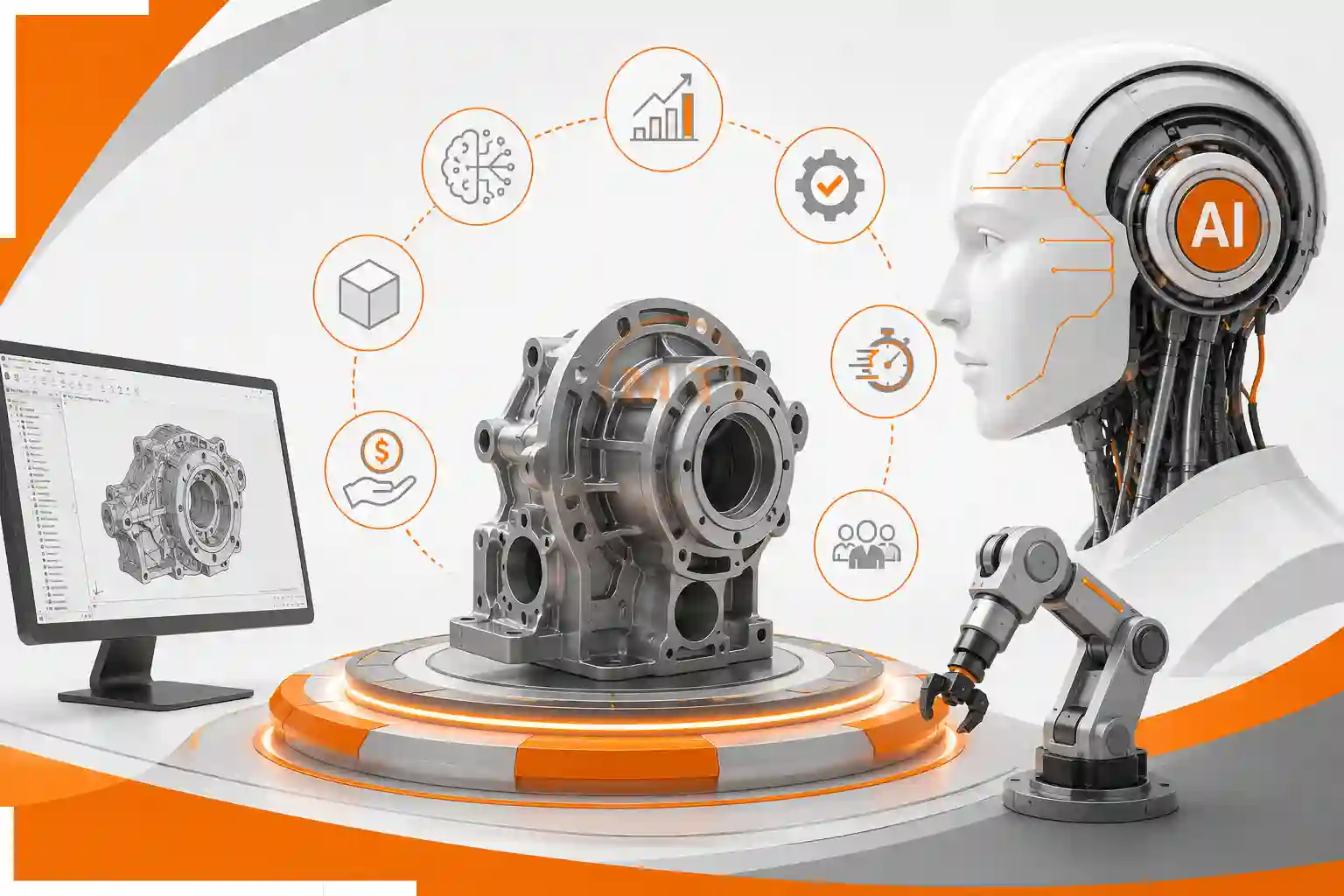
How AI Is Transforming Mechanical Engineering
1. Intelligent CAD Design
Modern CAD software has become more intelligent with the help of AI. Instead of manually defining each feature, engineers get intelligent teams and design recommendations based on past projects and engineering standards.AI can suggest:
- Better feature placement
- Improved assembly methods
- Design corrections
- Standard components
- Faster modeling workflows
2. Generative Design
Generative Design is one of the biggest innovations in AI in Mechanical Design.Instead of manually designing a component, engineers simply provide:
- Material type
- Manufacturing process
- Load conditions
- Weight targets
- Cost limitations
3. AI-Powered Simulation
Traditional engineering simulation often requires multiple iterations before achieving the desired performance.AI accelerates simulation by:
- Predicting stress distribution
- Identifying weak regions
- Optimizing thermal performance
- Improving fluid flow analysis
- Reducing unnecessary simulation cycles
4. Design Optimization
Optimization is one of the strongest applications of AI in Mechanical Design.AI algorithms analyze:
- Structural strength
- Material efficiency
- Manufacturing feasibility
- Product performance
- Cost efficiency
5. Automated Drawing Generation
Creating manufacturing drawings manually can consume a significant amount of engineering time.AI-powered CAD software can automatically generate:
- 2D drawings
- Dimensions
- Tolerances
- Bill of Materials (BOM)
- Assembly documentation
6. Smart Manufacturing Integration
Mechanical design is no longer isolated from manufacturing. Using AI in Mechanical Design, CAD models can directly interact with manufacturing systems to ensure products are optimized for production.AI evaluates:
Machining feasibility- Tool accessibility
- Manufacturing costs
- Production efficiency
- Material waste
Benefits of AI in Mechanical Design
The use of AI in mechanical design has many benefits for engineers and organizations.Faster Product Development
With AI, repetitive engineering tasks are automated, and designers are able to complete their designs in significantly less time.Improved Design Accuracy
AI checks engineering constraints on a regular basis, saving time and costs by eliminating design mistakes before the product is produced.Reduced Costs
Reduced materials usage, less prototypes, and shorter design cycles all assist with reducing development costs.Better Product Performance
AI evaluates several design options to determine the most efficient solution.Enhanced Innovation
Instead of using the traditional methods, engineers can explore creative AI-generated ideas that they may not have even considered.Sustainable Engineering
AI optimizes materials used and thereby reduces waste while contributing to environmentally friendly manufacturing practices.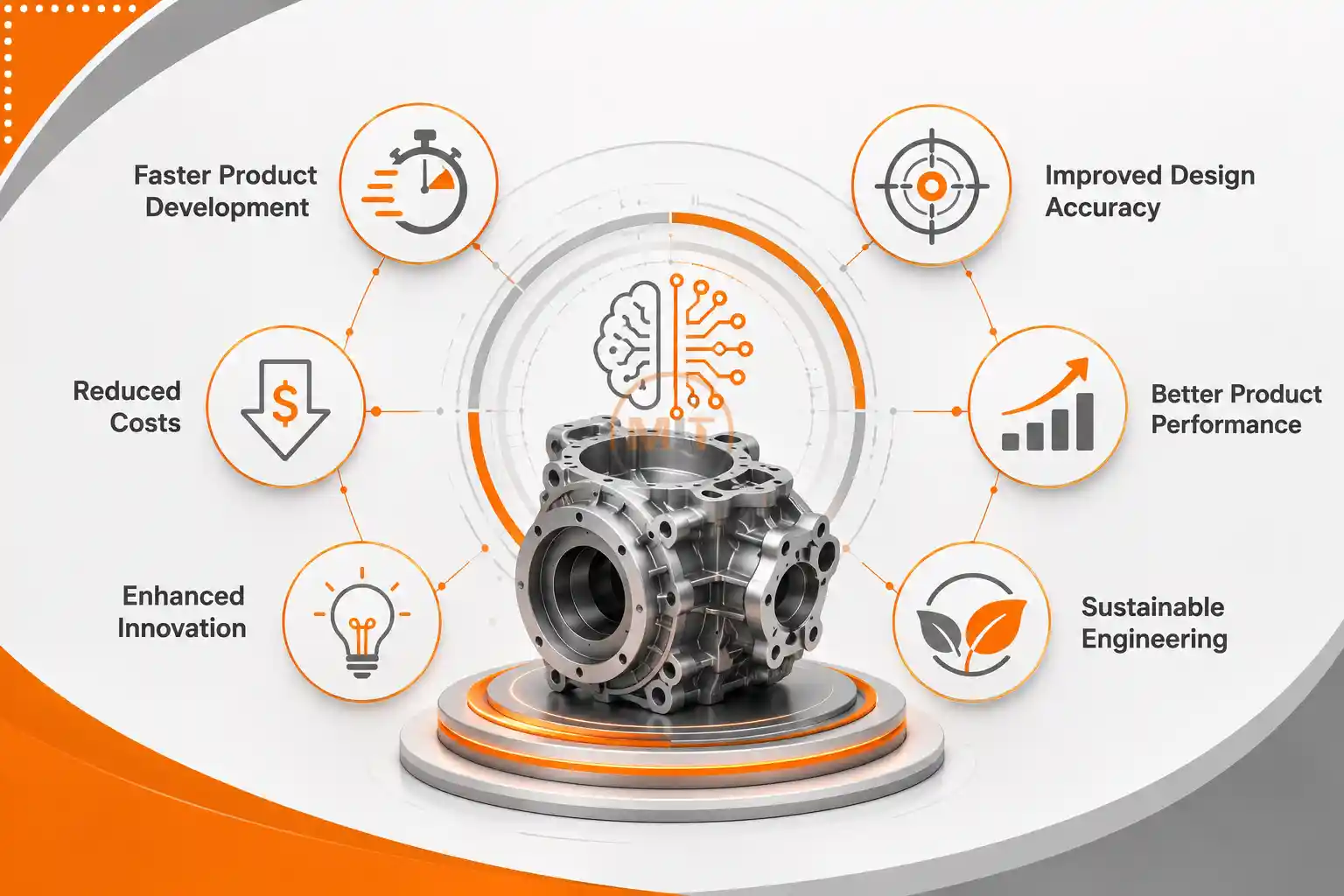
Applications of AI in Mechanical Design
Automotive Industry
Automobile manufacturers use AI for:- Lightweight vehicle components
- Crash optimization
- Engine design
- Electric vehicle development
- Manufacturing automation
Aerospace Engineering
Aircraft manufacturers rely on AI in Mechanical Design for:- Weight reduction
- Structural optimization
- Fuel efficiency
- High-performance components
- Safety improvements
Industrial Equipment
AI helps improve:- Machine design
- Industrial automation
- Robotics
- Conveyor systems
- Factory equipment
Consumer Products
Manufacturers use AI to develop:- Home appliances
- Consumer electronics
- Smart devices
- Industrial tools
Medical Devices
Mechanical engineers use AI for:- Prosthetics
- Surgical instruments
- Medical equipment
- Implant design
Popular AI Tools Used in Mechanical Design
Several modern engineering software platforms now include AI-powered capabilities.Some popular tools include:
- Autodesk Fusion
- Autodesk Inventor
- Siemens NX
- SolidWorks
- PTC Creo
- CATIA
- Ansys
- Altair Inspire
Skills Required for AI in Mechanical Design
To build a successful career in AI in Mechanical Design, professionals should develop expertise in:- CAD Modeling
- Engineering Drawing
- Machine Design
- Finite Element Analysis (FEA)
- Manufacturing Processes
- Product Design
- Generative Design
- Artificial Intelligence Fundamentals
- Machine Learning Basics
- Data Analysis
- Python Programming
Career Opportunities
The demand for professionals skilled in AI in Mechanical Design continues to grow as industries adopt smart engineering practices.Career roles include:
- Mechanical Design Engineer
- CAD Engineer
- Product Design Engineer
- CAE Engineer
- Simulation Engineer
- R&D Engineer
- Manufacturing Engineer
- Automation Engineer
- Generative Design Specialist
- AI Engineering Consultant
Future of AI in Mechanical Design
The role of AI in Mechanical Design looks quite promising as we look ahead. Technologies like digital twins, cloud-based collaboration tools, smart robotics, and AI-driven product lifecycle management are starting to change how engineers work, and this trend seems set to continue.Future developments may include:
- Fully autonomous design assistants
- Real-time design validation
- AI-powered engineering collaboration
- Self-optimizing CAD models
- Automated sustainability analysis
- Predictive engineering and maintenance integration
Conclusion
AI in Mechanical Design is changing how engineers think about designing, analyzing, and manufacturing products. Whether it is intelligent CAD modeling, generative design, AI-enabled simulations or smart manufacturing, Artificial Intelligence is leading to faster, smarter and more efficient engineering.
With industries adopting digital transformation, engineers who have adequate knowledge about AI-based mechanical design tools will be prepared to find solutions for complex engineering problems and innovate products. Be it a learner, design engineer or an experienced professional, Learning AI in Mechanical Design is worth investing time for the years to come.
The future of engineering is the professionals who can merge mechanical design knowledge with Artificial Intelligence. This is the best time to learn these skills as engineering becomes increasingly competitive.Frequently Asked Questions FAQs
1. What is AI in Mechanical Design?
AI In Mechanical Design is the use of Artificial Intelligence and machine learning technologies to automate, optimize and improve mechanical product design, simulation and manufacturing processes.2. How AI is Useful in Mechanical Engineering ?
Artificial intelligence can help mechanical engineers automate repetitive tasks, optimize designs, improve simulations, reduce errors and shorten product development cycles.3. What software is used for Mechanical Design by Artificial Intelligence?
The most used software are Autodesk Fusion, Autodesk Inventor, SolidWorks, Siemens NX, CATIA, PTC Creo, Ansys and Altair Inspire.4. Can AI replace mechanical engineers?
No. AI helps engineers with repetitive and data-heavy work, but engineers still make key design choices, solve difficult issues, and lead innovation.Share this on
-

-

-

Recent Articles
-
CATIA Surface Modeling: Design Complex 3D Shapes with Ease
-
What Should You Know Before Choosing CAD Design Jobs?
-

Top Civil CAD Courses for Engineering, Design & BIM Careers
-

Navisworks Course Training: Fees, Syllabus & Certification
Archive posts
-
October2026
-
September2026
-
August2026
-
July2026
-
June2026
-
May2026
-
April2026
-
March2026
-
February2026
-
January2026
-
December2025
-
November2025
-
October2025
-
September2025
-
August2025
-
July2025
-
June2025
-
May2025
-
April2025
-
March2025
-
January2025
-
September2024
-
August2024
-
July2024
-
June2024
-
May2024
-
April2024
-
March2024
-
February2024
-
January2024
-
September2023
-
December2022
-
September2022
