 Back to Articles listing
AutoCAD Electrical Course vs AutoCAD: What’s the Difference?
- January 9, 2026
- 3 Min
- By - MiT
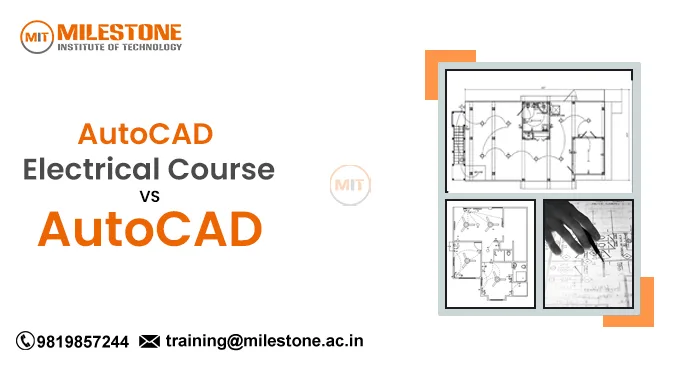
AutoCAD is one of the most commonly used design software in the engineering field. As industries continue to specialize, the need for individuals with specific technical skills has increased as well. The AutoCAD Electrical Course provides specialized training in addition to basic AutoCAD. While both Autodesk applications are similar in nature with the same user interface, they provide different functionality, options and opportunities.
If you are confused about which one to pursue (AutoCAD vs. the AutoCAD Electrical Course), this guide will give you a better understanding of how each differs from other, what benefits they offer and what your learning priorities will be.What Is AutoCAD?
AutoCAD is an all-purpose computer program for CAD, allowing you to produce 3D and 2D drawings using computers. This software is frequently employed by civil engineers, architectural designers, mechanical engineers, builders and other professionals working in related fields.
AutoCAD is used to ensure accurate drafting and design-related documentation. All drawings produced are derived from original concepts developed using AutoCAD; therefore, it is well suited for beginners who wish to acquire the skills to produce technical drawings from beginning to end with accuracy.
Using AutoCAD also provides you with skill sets essential for any career in design, including:- Technical drawing practices
- Layers
- Dimensioning and labeling
- Creating layouts and Plotting

What Is an AutoCAD Electrical Course?
An AutoCAD Electrical Course is a specially designed version of AutoCAD that is used specifically for designing electrical control systems, rather than manual drafting. The course provides electrical engineers and technicians with tools, symbols, and automation capabilities specifically for their field.
The purpose of the AutoCAD Electrical Course is to provide the tools necessary to create electrical schematics, control panels, PLC diagrams, wiring layouts, and circuit documentation as accurately and easily as possible.
Key highlights of an AutoCAD Electrical Course include:- Ready-made electrical symbols and libraries
- Automatic wire numbering and component tagging
- Error checking and validation in real-time
- Automated reports such as BOMs (Bill of Materials) and wire lists
Core Difference Between AutoCAD and AutoCAD Electrical Course
While AutoCAD serves multiple purposes, the primary focus of AutoCAD electrical training is to automate and provide the tools necessary to ease the burden on electrical design.
Electrical Drawings for AutoCAD must be created manually and the AutoCAD Electrical Course takes advantage of smart tools to simplify many of the complicated tasks related to electrical design. It saves time and reduces errors.What Special Skills Do You Learn in AutoCAD?
Learning AutoCAD builds a strong technical base that is useful across industries. It helps learners understand the following skills:- Engineering Drawing Logic
- Precision Drafting Techniques
- Layout Planning and Scaling
- Industry Standards for Drawings
What Special Skills Do You Learn in an AutoCAD Electrical Course?
AutoCAD Electrical Course teaches real-world applications of electrical design technology, which cannot be achieved with simple basic AutoCAD.
By participating in an AutoCAD Electrical Course, you will develop skills for:- Creating Electrical Schematic Diagrams
- Creating Control Panel Layouts
- Creating PLC I/O Layouts
- Creating Industrial Wiring Diagrams
- Creating Electrical documentation standards
Which One Should You Learn First?
For beginners, learning AutoCAD is very beneficial for understanding some of the basic concepts related to drafting. If your goal is to move into an area such as electrical engineering, industrial design, or automation, it would be a good choice to take the AutoCAD Electrical Course.
Many professionals start with AutoCAD and expand their knowledge of AutoCAD Electrical tools through a course later on, allowing them to establish specialization and provide more possibilities for career advancement.Career Benefits of AutoCAD Electrical Course vs AutoCAD
AutoCAD offers a entry-level job opportunities within design and engineering positions. The AutoCAD Electrical course will provide you with a more technical and specialized job opportunity.- Electrical Engineering
- Automation Engineering
- Control Panel Design
- Industrial Maintenance
Final Thoughts
In the engineering world, both AutoCAD and the AutoCAD Electrical Course provide high quality training. While AutoCAD teaches the basic skills needed for drafting, the AutoCAD Electrical Course offers a specialized curriculum to teach students how to develop and apply advanced automated tools specific to built electrical installations.
While choosing between AutoCAD and the AutoCAD Electrical Course, If your main goal is flexibility, then the AutoCAD course is the best for both fields. On the other hand, if you desire a high degree of specialization and value then the AutoCAD Electrical Course is the best choice. Knowing your long-term career objectives will help determine the best method for learning and keeping your skills relevant in the industry.Share this on
-

-

-

Recent Articles
-

Top Civil CAD Courses for Engineering, Design & BIM Careers
-

Navisworks Course Training: Fees, Syllabus & Certification
-

Top CAD Interview Questions Freshers Must Prepare for Jobs
-

Structural Design Course in Thane: Software & Career Guide
Archive posts
-
September2026
-
August2026
-
July2026
-
June2026
-
May2026
-
April2026
-
March2026
-
February2026
-
January2026
-
December2025
-
November2025
-
October2025
-
September2025
-
August2025
-
July2025
-
June2025
-
May2025
-
April2025
-
March2025
-
January2025
-
September2024
-
August2024
-
July2024
-
June2024
-
May2024
-
April2024
-
March2024
-
February2024
-
January2024
-
September2023
-
December2022
-
September2022
