 Back to Articles listing
Before Joining PLC and SCADA Course, Verify These Factors
- June 26, 2026
- 3 Min
- By - MiT

Before Joining PLC and SCADA Course, Verify These Factors
Industrial automation is quickly changing the face of manufacturing, energy, infrastructure, and other process industries around the world. With more and more companies adopting smart technologies and automated systems, the need for skilled automation professionals is growing day by day. This growing demand has motivated many students, engineers, and working professionals to join a PLC and SCADA Course to carve out a successful career in automation.
But not all courses are created equal. Not every course will give you the same level of quality, hands-on exposure, or career assistance. Choosing the right PLC & SCADA Course can make all the difference in your journey towards becoming an automation professional. Many people focus solely on the fee or the duration of the course without considering some of the most critical factors that decide the true worth of the training.
Before you invest your time and money, here are the key factors you should evaluate before choosing a PLC and SCADA Course. This guide explains the top factors you should consider before joining a PLC and SCADA Course so you can choose the best one for yourself and propel your career ahead.What is a PLC and SCADA Course?
A PLC and SCADA Course is a specialized training program that teaches industrial automation technologies used in modern manufacturing & process industries.
PLC (Programmable Logic Controller)A PLC (Programmable Logic Controller) is an industrial computer used to control machines, production lines, and automated processes. It helps industries to become more efficient, accurate, and safe.
SCADA (Supervisory Control and Data Acquisition)SCADA stands for Supervisory Control and Data Acquisition. It is a software-based system that is used for monitoring, controlling, and collecting real-time data from industrial equipment and processes.
A comprehensive PLC and SCADA Course typically covers:
- PLC Programming
- Ladder Logic Development
- Industrial Automation Fundamentals
- HMI (Human Machine Interface)
- SCADA Configuration
- Industrial Communication Protocols
- Sensors and Actuators
- Troubleshooting Techniques
- Industrial Projects
Why Choosing the Right PLC and SCADA Course Matters
The automation industry values practical skills over theoretical knowledge. Employers expect you to know real industrial scenarios and work confidently with automation systems.Selecting the right PLC and SCADA Course helps you:
- Gain industry-relevant skills
- Work on real automation projects
- Learn from experienced trainers
- Improve job readiness
- Increase placement opportunities
- Build confidence in handling industrial systems

1. Verify the Course Curriculum
The first thing you should check is what topics are covered in the curriculum. Make sure that the PLC & SCADA course covers both basics as well as advanced concepts essential for industrial automationLook for topics such as:
PLC Fundamentals:
- PLC Architecture
- Input and Output Devices
- PLC Wiring
- Ladder Logic Programming
SCADA Systems:
- SCADA Architecture
- Data Acquisition
- Alarm Management
- Trend Analysis
HMI Development:
- Screen Designing
- Process Visualization
- User Interface Configuration
Communication Protocols:
- Modbus
- Profibus
- Ethernet/IP
- Industrial Networking
Advanced Automation Concepts:
- VFD Integration
- Servo Systems
- Industrial IoT Basics
- Automation Project Development
2. Check for Practical Training Facilities
One of the most important factors to consider while choosing a PLC & SCADA course is the amount of practical exposure. You cannot master Industrial Automation by just reading books. Only hands-on experience will help you understand how industrial systems work in real life.Verify whether the institute provides:
- PLC Hardware Kits
- SCADA Software Access
- Industrial Panels
- Sensors and Actuators
- HMI Devices
- Industrial Networking Equipment
3. Evaluate Trainer Experience
The quality of trainers directly impacts the success of a PLC and SCADA Course.Before joining, check:
- Industry experience of trainers
- Automation project exposure
- Certifications held by instructors
- Teaching methodology
- Student feedback and reviews
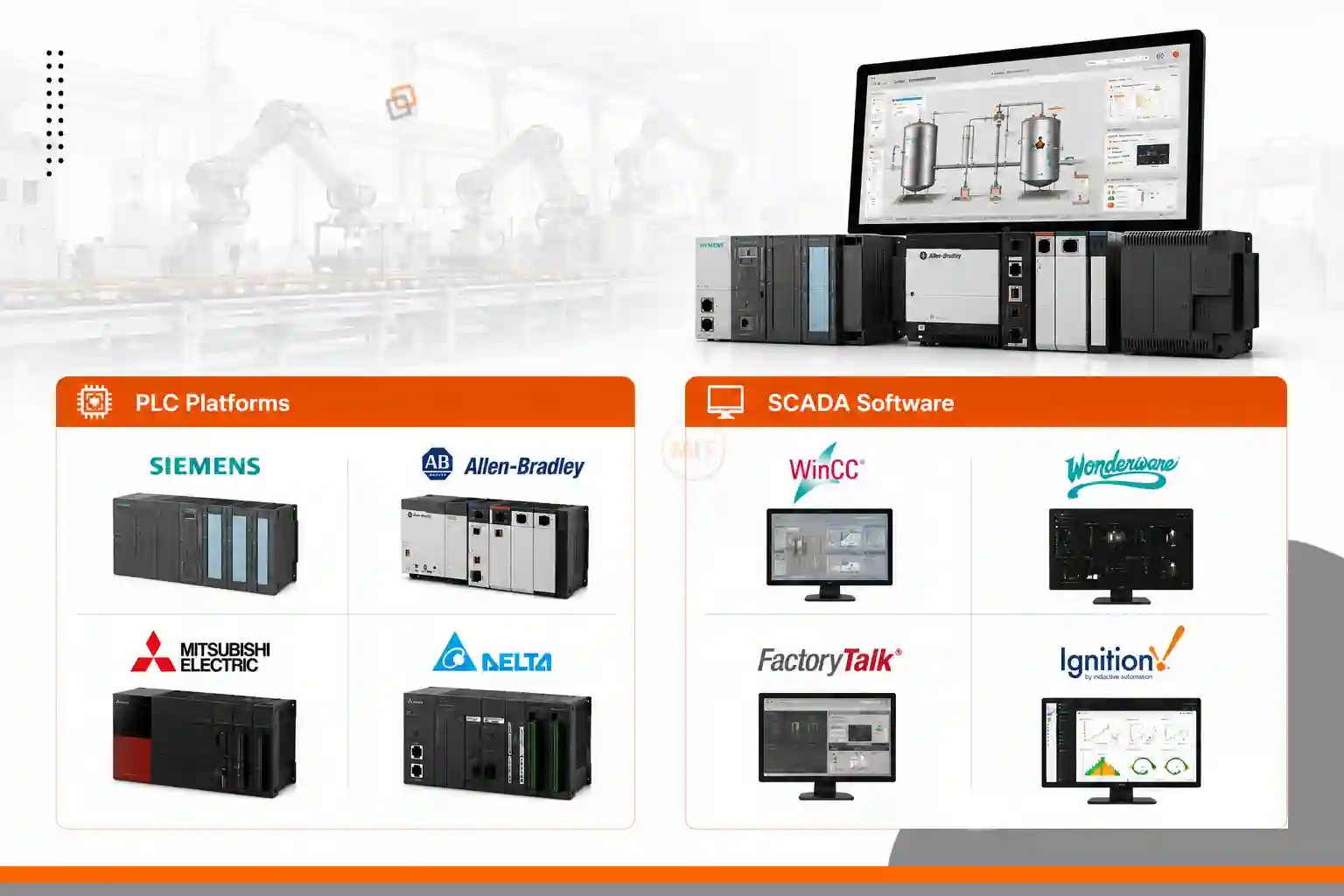
4. Assess Industry-Relevant Software and Hardware
Industrial automation technology continues to evolve. An old PLC & SCADA Course will not prepare you for today’s industry needs.Verify whether the training includes:
PLC Platforms:
- Siemens PLC
- Allen-Bradley PLC
- Mitsubishi PLC
- Delta PLC
SCADA Software:
- WinCC
- Wonderware
- FactoryTalk
- Ignition SCADA
5. Check for Live Projects and Case Studies
Real-world projects give you great experience and build your portfolio.A good PLC and SCADA Course should include:
- Industrial Automation Projects
- Process Control Projects
- Conveyor Automation Systems
- Water Treatment Automation
- Packaging Line Automation
- Energy Monitoring Systems
6. Verify Placement Assistance
Career Support is an Important Factor When Choosing A PLC and SCADA CourseAsk the institute about:
- Placement Partnerships
- Industry Connections
- Resume Preparation Support
- Mock Interviews
- Job Assistance Programs
7. Review Certification Value
A certification validates your skills and knowledge in industrial automation.Before enrolling in a PLC and SCADA Course, verify:
- Whether the certificate is industry-recognized
- Course completion requirements
- Project assessment criteria
- Industry acceptance of certification
8. Compare Course Duration and Learning Flexibility
Different learners have different schedules and learning preferences.Choose a PLC and SCADA Course that offers:
- Weekday Batches
- Weekend Batches
- Fast-Track Programs
- Flexible Timings
- Online and Offline Learning Options
9. Read Student Reviews and Success Stories
Student feedback gives you insights into the actual quality of your PLC & SCADA CourseLook for reviews related to:
- Trainer Expertise
- Practical Sessions
- Project Exposure
- Placement Support
- Learning Environment
10. Understand Career Opportunities After the Course
Before enrolling in a PLC & SCADA Course, it is essential that you get to know about the career opportunities after completing the course.Popular job roles include:
PLC Programmer
Develops and maintains industrial control programsSCADA Engineer
Designs and manages SCADA monitoring systemsAutomation Engineer
Implements automation solutions for industries.Control System Engineer
Optimizes industrial process control systemsInstrumentation Engineer
Handles sensors, transmitters and industrial instruments.Maintenance Engineer
Ensures smooth running of your automated machinery With growing industrial automation adoption, skilled professionals are in high-demand across manufacturing, oil & gas, pharmaceuticals, automotive, power plants and infrastructure.Benefits of Joining a Quality PLC and SCADA Course
A well-designed PLC and SCADA Course provides several advantages:
- Industrial learning
- Hands-on skills
- Better understanding of industry processes
- More job opportunities
- High career growth
- Real-world automation experience
- Technical confidence
- Effective troubleshooting

Common Mistakes to Avoid While Choosing a PLC and SCADA Course
Many learners decide based on marketing claims. Don’t fall for these mistakes:
Choosing Based Only on Fees
Low-cost programs can be deficient in terms of practical training and infrastructure.Ignoring Practical Exposure
Automation skills are best learned by doing.Not Checking Trainer Credentials
Experienced trainers tend to produce better results.Overlooking Placement Support
Career assistance can greatly affect your chances of getting that next great job.Ignoring Course Content
Make sure the syllabus aligns with the current industry’s standards. Avoiding these mistakes will help you choose the best PLC and SCADA course for your career goals.Conclusion
Industrial automation provides exciting career opportunities for students and working professionals seeking a high-demand technical job. But the quality of your training makes all the difference. Before joining a PLC and SCADA Course, check on the course curriculum, trainer’s expertise, practical lab setup, software tools, project work, certificate value and placement assistance. A well-designed PLC and SCADA Course will not just teach you about automation but provide you with the hands-on experience required to succeed in the industry. Spending some time understanding the above points will ensure that you are making a smart investment in your future and building a rewarding career in industrial automation.Frequently Asked Questions (FAQs)
1. Who Should Join A PLC and SCADA Course?
A PLC and SCADA course is ideal for engineering students, diploma holders, electricians, technicians, maintenance professionals, and anyone interested in industrial automation careers.2. Is PLC & SCADA A Good Career Option In 2026?
Yes. With increasing automation across industries, those who have honed their skills through a PLC & SCADA Course are still highly sought-after professionals globally.3. What skills will I learn in a PLC & SCADA Course?
You’ll learn how to program PLCs, configure SCADA systems, develop HMIs, work on industrial networking, automate processes, troubleshoot controls, and design control systems4. How Long Does It Take To Complete A PLC & SCADA Course?
The duration of a PLC & SCADA Course depends on the Institute which ranges between 1 Month – 6 Months based on the Curriculum & Learning Mode.Share this on
-

-

-

Recent Articles
-

CATIA Surface Modeling: Design Complex 3D Shapes with Ease
-

What Should You Know Before Choosing CAD Design Jobs?
-

Top Civil CAD Courses for Engineering, Design & BIM Careers
-

Navisworks Course Training: Fees, Syllabus & Certification
Archive posts
-
October2026
-
September2026
-
August2026
-
July2026
-
June2026
-
May2026
-
April2026
-
March2026
-
February2026
-
January2026
-
December2025
-
November2025
-
October2025
-
September2025
-
August2025
-
July2025
-
June2025
-
May2025
-
April2025
-
March2025
-
January2025
-
September2024
-
August2024
-
July2024
-
June2024
-
May2024
-
April2024
-
March2024
-
February2024
-
January2024
-
September2023
-
December2022
-
September2022
